
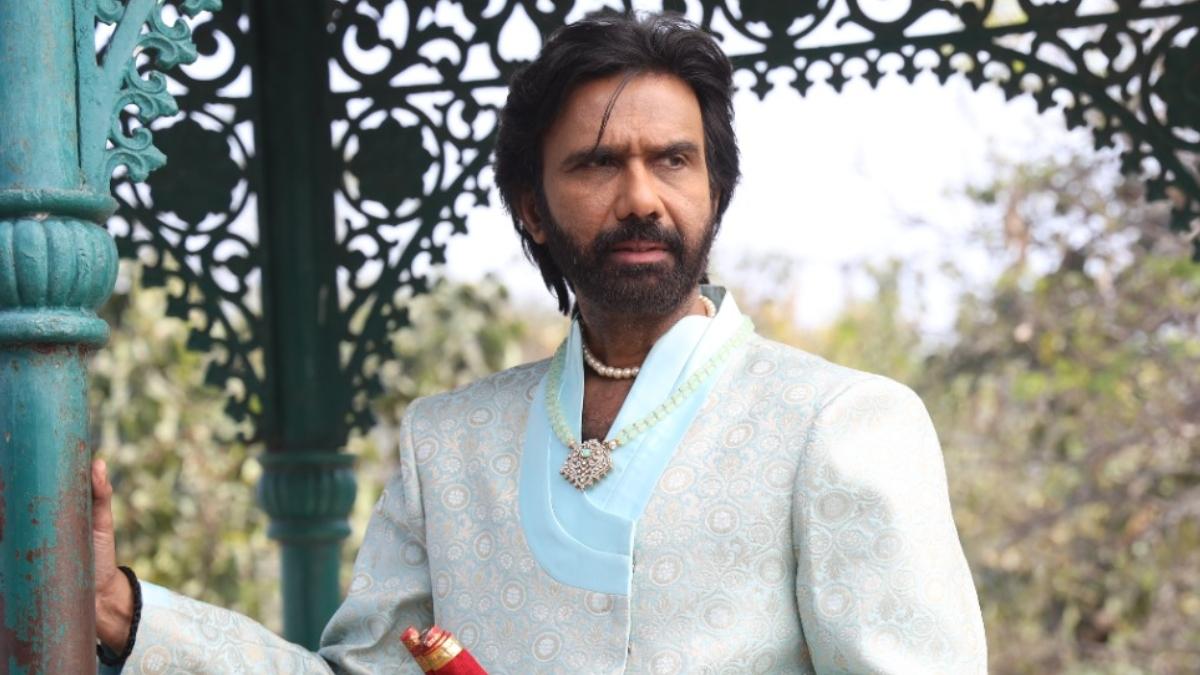
Hyderabad, a city steeped in tales of nawabs, pearls, and a unique blend of cultures, holds secrets within its ancient walls. Among these, few are as enchanting and elusive as the legend of Taramati. For generations, her name has echoed through the grand arches of the Taramati Baradari, a historical sarai and monument that stands as a silent testament to a bygone era. Now, master storyteller and theatre doyen Mohammad Ali Baig embarks on a compelling journey to peel back the layers of time and truly trace the legend of this enigmatic figure.
### Hyderabad’s Whispering Walls
Imagine a Hyderabad of centuries past, under the glittering reign of the Qutb Shahi dynasty. It was a time when art, poetry, and architecture flourished, a vibrant tapestry woven with the threads of courtly life and popular culture. In this rich setting, the name Taramati emerges – a courtesan, a dancer, a singer whose talent was said to captivate Sultan Abdullah Qutb Shah himself. Her story, however, isn’t just a simple romance; it’s a mosaic of fact, folklore, and romantic embellishment that has intrigued historians and artists alike.
The Taramati Baradari, an architectural marvel known for its 12 arches, is perhaps the most tangible link to her memory. Legend has it that the Sultan, enamoured by her voice, would have her perform from a distance, her melodies reaching him through specially constructed tunnels. While the veracity of every detail remains debated, the essence of her story – a woman of exceptional artistic prowess who left an indelible mark on a powerful empire – endures.
### Mohammad Ali Baig: The Chronicler of Souls
Enter Mohammad Ali Baig, a name synonymous with profound historical narratives brought to life on stage and through meticulous research. Known for his evocative productions that breathe new life into Hyderabad’s forgotten heroes and pivotal moments, Baig is uniquely positioned to delve into Taramati’s world. His approach is never merely academic; it’s a deeply human exploration, aiming to connect modern audiences with the emotional core of history.
Baig’s quest to trace Taramati’s legend goes “beyond the Baradari” – beyond the physical structure and into the cultural and social landscape that shaped her. It’s about understanding the woman behind the myth, the artist, and the societal context that allowed a courtesan to become a legend whose name graces a historical monument. His work involves poring over neglected historical accounts, deciphering poetic references, and perhaps most importantly, using his intuitive understanding of human nature to paint a vivid picture.
### Unveiling the Human Behind the Legend
In an age often quick to reduce historical figures to simple footnotes or exaggerated caricatures, Baig’s commitment to nuanced storytelling is refreshing. He doesn’t just recount events; he strives to understand motivations, aspirations, and the struggles faced by individuals in their specific historical contexts. For Taramati, this means moving beyond the image of a mere object of royal affection to explore her agency, her artistry, and the strength required to thrive in a demanding courtly environment.
Was she a muse, a performer, a political figure, or all of the above? Baig’s exploration promises to delve into these complexities, inviting us to reconsider how legends are formed and how much of ourselves we project onto figures from the past. He challenges us to look beyond the popular narrative and search for the authentic voice of Taramati herself, however faint it might be through the mists of time.
### The Enduring Allure of Art and Legacy
Taramati’s story, as illuminated by Baig, serves as a powerful reminder of art’s enduring power and the ways in which human lives can leave an unforgettable legacy. It speaks to the universal themes of passion, talent, influence, and the fragile line between historical fact and popular imagination. In a city that constantly reinvents itself, reconnecting with such figures helps anchor Hyderabad’s identity, providing a sense of continuity and depth.
By painstakingly tracing her legend, Mohammad Ali Baig isn’t just bringing Taramati back into the limelight; he’s reinforcing the importance of preserving cultural heritage. He reminds us that history isn’t just dates and names, but a vibrant collection of human experiences that continue to resonate, teach, and inspire. His work is a testament to the fact that some stories, even if partially obscured by time, are simply too compelling to be forgotten.
### Why This Matters
Mohammad Ali Baig’s exploration of Taramati’s legend is more than just a historical recount. It’s a vital effort to preserve cultural heritage, challenge popular narratives, and give voice to a captivating figure from Hyderabad’s past. In doing so, he enriches our understanding of art, power, and the complex interplay between legend and reality, reminding us that every city’s soul lies within its untold stories.