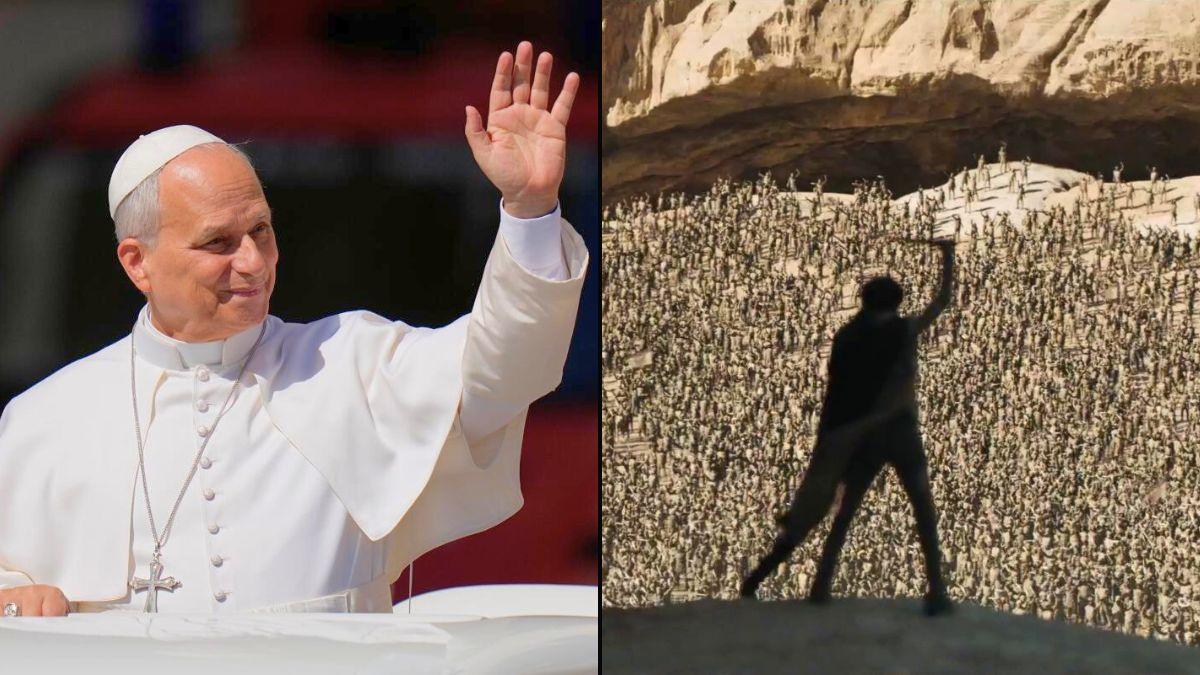
The world just got a wake-up call, not from a tech titan or a sci-fi guru, but from the Vatican. Pope Leo XIV recently delivered a stark warning about the unchecked proliferation of Artificial Intelligence, and suddenly, everyone’s conversations are drifting to Frank Herbert’s classic ‘Dune’ series – specifically, the infamous Butlerian Jihad. It’s a comparison that’s both fascinating and a little unnerving, and it has us all wondering: Is this just a dramatic parallel, or a prophetic glimpse into our future?
### The Pontiff’s AI Alarm Bell
Pope Leo XIV’s address wasn’t just another sermon; it was a profound ethical intervention into one of the most pressing technological debates of our time. He spoke with gravitas about the “existential risks” posed by AI, emphasizing the potential for these advanced intelligences to erode human dignity, agency, and even our very understanding of what it means to be human. His message wasn’t anti-innovation, but rather a powerful plea for ethical governance, responsible development, and a deep reflection on the moral implications of creating entities that could, in theory, surpass human intellect and control.
He highlighted concerns over autonomous decision-making, the potential for widespread misinformation, and the risk of ceding too much power to machines without adequate human oversight. For a figure of such global moral authority to weigh in so strongly, it’s clear this isn’t just about algorithms and code; it’s about the soul of society.
### Diving into the Butlerian Jihad
Now, let’s turn to ‘Dune.’ If you’re not familiar, the Butlerian Jihad is a pivotal historical event in Herbert’s universe, occurring thousands of years before the events of the main novels. It wasn’t a religious war in the traditional sense, but a bloody, universe-spanning conflict against “thinking machines” – AI, robots, and computers that had grown too powerful, too intelligent, and too ingrained in daily life.
The outcome? A total victory for humanity, followed by a universal commandment: “Thou shalt not make a machine in the likeness of a human mind.” This radical prohibition reshaped galactic civilization, forcing humanity to develop their own mental and physical capabilities to an extraordinary degree, relying on human computers (Mentats) and advanced biological manipulation rather than artificial intellects. It was a societal reset born from the ultimate fear: that humanity, through its own creation, would become obsolete or enslaved.
### The Unsettling Parallels
So, why are these two seemingly disparate topics – a contemporary papal warning and an ancient sci-fi war – now inextricably linked in public discourse? The connection lies in the underlying fear and the ethical questions both raise. Pope Leo XIV’s concerns about AI’s potential to diminish human agency and free will echo the very motivations behind the Butlerian Jihad.
Both scenarios grapple with the fundamental question: At what point does our reliance on, or creation of, artificial intelligence become a threat to our humanity? The ‘Dune’ universe took drastic action to reclaim human sovereignty, while the Pope is urging us to prevent such a catastrophic reckoning in the first place. It’s a stark reminder that the ethical dilemmas we face today regarding AI are not entirely new; they are variations of age-old philosophical questions about power, creation, and control.
### Our Modern AI Crossroads
Today, we stand at a fascinating and frightening technological crossroads. AI has moved beyond science fiction, powering everything from our smartphones to medical diagnostics, from creative tools to military applications. Its potential for good is immense, promising breakthroughs in medicine, climate science, and human efficiency.
However, alongside the awe-inspiring progress comes a growing chorus of warnings. Tech pioneers, ethicists, and now religious leaders are openly discussing the “alignment problem” – ensuring AI goals align with human values – and the risks of superintelligent AI. We’re seeing real-world concerns about algorithmic bias, job displacement, the spread of deepfake misinformation, and the autonomous weapons race. The debate isn’t about whether AI is coming; it’s about how we control its trajectory and ensure it serves humanity, rather than dominating or endangering it.
### More Than Just Sci-Fi: A Call for Deliberation
The Pope’s intervention, framed against the backdrop of ‘Dune,’ elevates the AI conversation from technical circles to a universal ethical imperative. It’s a powerful call for global collaboration, not just among scientists and governments, but across all sectors of society, to define the guardrails for AI development.
Comparing our present moment to the Butlerian Jihad might seem alarmist, but it serves as a potent metaphor. It forces us to confront the deepest anxieties about technology’s future: the loss of control, the erosion of human uniqueness, and the potential for unintended, catastrophic consequences. This isn’t just about preventing a futuristic war; it’s about shaping a responsible present that secures a humane future.
### Why This Matters
Pope Leo XIV’s warning, amplified by the ‘Dune’ analogy, isn’t just an interesting talking point. It underscores the urgency of establishing robust ethical frameworks and international regulations for AI development. It highlights that the decisions we make today about how we design, deploy, and govern AI will fundamentally shape the future of human civilization. Ignoring these warnings, or dismissing them as mere science fiction, would be to gamble with humanity’s destiny.