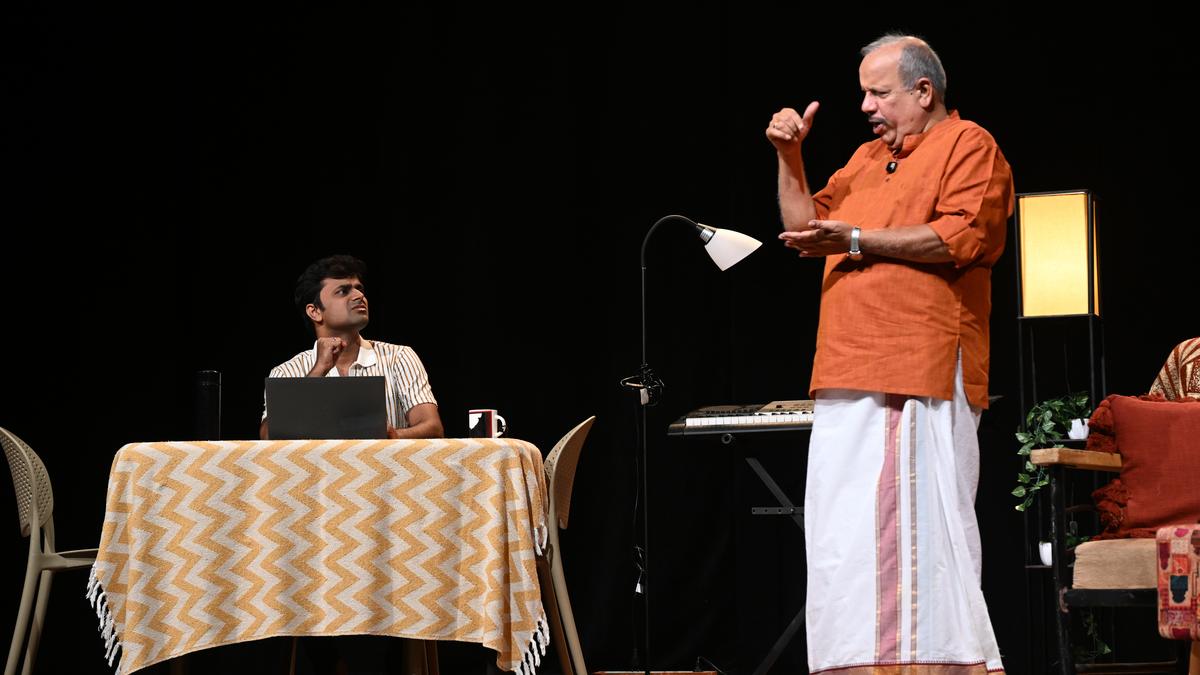
We live in an age of constant connection, where a tap or a swipe can bridge continents in an instant. Yet, beneath the veneer of likes, shares, and endless scrolling, a quieter, more insidious feeling often festers: loneliness. This stark paradox is precisely what the acclaimed Tamil play ‘ThanimAI’ (அனைமை) is powerfully dissecting on stage, prompting audiences to question the very fabric of their digitally intertwined lives.
The Digital Embrace and Its Hidden Costs
It’s a scene most of us know intimately: a group of friends, heads bowed, fingers dancing across glowing screens, physically together but mentally miles apart. Or the curated perfection of social media feeds, leaving us feeling inadequate, perpetually chasing an idealized version of life that rarely exists. ‘ThanimAI’, which fittingly translates to ‘Loneliness’ or ‘Solitude’ in Tamil, doesn’t just observe this phenomenon; it plunges deep into the emotional chasm it creates.
The play offers a poignant, often uncomfortable, look at how our devices, designed to connect us, can inadvertently push us further into isolation. It challenges the notion that being online is synonymous with being truly connected, highlighting the superficiality that can mask profound emotional detachment.
‘ThanimAI’: A Mirror to Our Times
More than just a narrative, ‘ThanimAI’ functions as a powerful mirror, reflecting the anxieties and contradictions of modern existence back at its audience. Through its characters and their interwoven stories, the play explores various facets of digital loneliness: the fear of missing out (FOMO) that drives endless online engagement, the pressure to maintain a perfect online persona, and the erosion of genuine face-to-face interactions.
In an era saturated with digital content, ‘ThanimAI’ opts for the visceral, immediate impact of live theatre to deliver its message. The raw emotions, the shared experience of the audience, and the direct confrontation with these difficult truths create a unique impact that digital mediums often struggle to replicate. It’s a testament to the enduring power of theatre to provoke thought and inspire self-reflection.
Crafting the Uncomfortable Truth
While specific plot details remain under wraps to preserve the element of surprise, the play is lauded for its nuanced portrayal of complex human emotions. It sidesteps easy answers or didactic preaching, instead inviting viewers to sit with the discomfort of their own digital habits. The creators behind ‘ThanimAI’ have clearly invested deeply in understanding the psychological underpinnings of our relationship with technology.
Their vision appears to be not to condemn technology outright, but to critically examine its unintended consequences. They seem to be asking: What are we sacrificing for the convenience and perceived connection of the digital world? And are we even aware of the trade-offs we’re making? The power of ‘ThanimAI’ lies in its ability to humanize these abstract concepts, making them tangible and relatable through the lives of its characters.
Beyond the Screen: Reclaiming Connection
The discussions sparked by ‘ThanimAI’ extend far beyond the theatre walls. Audiences leave with a renewed sense of introspection, pondering their own digital consumption and the quality of their real-world connections. It’s a conversation starter, a catalyst for reflection on how we can better navigate this dual existence – one foot in the digital realm, the other in tangible reality.
This isn’t just a play about loneliness; it’s a play about humanity’s enduring need for genuine connection, for understanding, and for presence. It subtly suggests that while technology offers unparalleled tools, the responsibility to foster meaningful relationships ultimately rests with us, far away from the glow of our screens.
Why This Matters
In a world increasingly reliant on digital interfaces for communication and interaction, understanding the subtle yet profound impact on our mental and emotional well-being is crucial. ‘ThanimAI’ isn’t just entertainment; it’s a vital cultural commentary that holds up a mirror to society, urging us to examine the very foundations of how we connect, or fail to connect, in the digital age. It’s a call to prioritize authentic human interaction in an era often defined by virtual substitutes.