The cricketing world is buzzing with news as all-rounder Vijay Shankar has announced his retirement from all forms of Indian cricket, effective immediately. The 35-year-old, known for his “three-dimensional” skill set and a controversial inclusion in India’s 2019 World Cup squad, revealed his decision to step away from the domestic and IPL circuits. His sights are now set on exploring opportunities in the burgeoning global franchise league landscape, a move that speaks volumes about the evolving nature of the sport and the immense pressures faced by professional athletes.
A Career Under the Scanner
Vijay Shankar’s journey in Indian cricket has been nothing short of a rollercoaster, often played out under the harsh glare of public scrutiny. Hailing from Tamil Nadu, he made his first-class debut in 2012 and quickly rose through the ranks with his solid right-handed batting and effective medium-pace bowling. It was this all-round ability that earned him the moniker of a “three-dimensional player,” a term famously coined by then-chief selector MSK Prasad during the lead-up to the 2019 Cricket World Cup.
His international debut came in a T20I against Sri Lanka in 2018, followed by an ODI cap later that year. He showed glimpses of his potential, notably with a match-winning partnership in a T20I against New Zealand. However, it was his selection for the prestigious World Cup that truly catapulted him into the national conversation, and unfortunately, into the eye of a storm.
The 2019 World Cup: A Dream Interrupted
Shankar’s inclusion in the 2019 World Cup squad, particularly over a seasoned middle-order batsman like Ambati Rayudu, sparked a significant debate among fans and pundits. The “3D player” tag, intended to highlight his versatile skills, ironically became a meme and a source of constant online trolling. Shankar himself acknowledged this period as a challenging one, facing unprecedented levels of negativity even before a ball was bowled.
He did get his chance to shine during the tournament, notably picking up a wicket on his very first ball in World Cup cricket against Pakistan – dismissing Imam-ul-Haq. He also contributed with the bat in a few games. However, his campaign was cruelly cut short by a toe injury sustained during a net session, forcing him to withdraw from the squad midway through the tournament against West Indies in Manchester. This unfortunate setback proved to be a pivotal moment; he never returned to the national side, gradually fading out of contention as new talents emerged.
IPL Journey: Moments of Brilliance
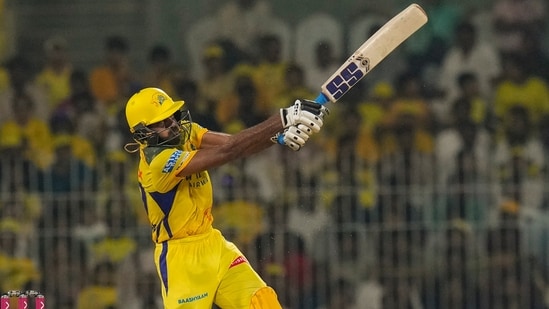
Beyond international cricket, Shankar carved out a notable career in the Indian Premier League (IPL), representing some of the league’s biggest franchises. His IPL journey began with Chennai Super Kings in 2014, and he returned to the yellow jersey for the 2025 season. In between, he had significant stints with Sunrisers Hyderabad from 2017 to 2021, showcasing his ability to finish games and bowl crucial overs. He also featured for Delhi Capitals in 2018 and later became part of the Gujarat Titans squad.
Throughout his IPL career, Shankar often found himself in a floating role, batting across different positions and being called upon to break partnerships with his medium pace. While he displayed flashes of brilliance, particularly during his time with SRH, he struggled for consistent impactful performances, often adding to the narrative of unfulfilled potential that seemed to follow him.
The Weight of “Unreal Hate and Negativity”
The most poignant aspect of Shankar’s retirement statement is his reference to “unreal hate and negativity.” This isn’t an isolated sentiment in the high-stakes world of Indian cricket. From social media trolling to harsh media criticism, players are constantly under immense pressure. For Shankar, the scrutiny surrounding his World Cup selection, coupled with injuries and fluctuating form, created a particularly challenging environment.
The expectation to consistently deliver on a national stage, especially when perceived as a replacement for a fan favourite, can take a severe toll on a player’s mental well-being. His decision to retire from the Indian setup to seek opportunities elsewhere underscores the desire for a less intense, perhaps more fulfilling, chapter in his cricketing life. It’s a stark reminder of the human cost behind the glitz and glamour of professional sport.
A New Chapter: Global Franchise Dreams
With his sights now firmly set on international franchise leagues, Vijay Shankar is joining a growing legion of cricketers who are opting for a flexible career path outside the traditional domestic and international structures. Leagues like the Caribbean Premier League (CPL), Big Bash League (BBL), Pakistan Super League (PSL), International League T20 (ILT20), and Major League Cricket (MLC) offer attractive financial incentives, diverse cricketing experiences, and often, a less suffocating environment.
For Shankar, this move could mean a chance to specialise in T20 cricket, focusing on his strengths as a middle-order hitter and a handy bowler, without the constant comparison to his earlier “3D” billing. It’s an opportunity to rediscover his joy for the game and extend his professional career on his own terms.
Why This Matters
Vijay Shankar’s retirement isn’t just about one player ending a chapter; it’s a reflection of the intense pressures in Indian cricket and the changing landscape of the global game. His candid admission about “unreal hate” highlights the critical importance of mental health support for athletes and the toxic side of online fan culture. Furthermore, his decision to pivot towards franchise leagues signals a continuing trend, where players prioritise global opportunities, potentially reshaping the future of cricket careers. It’s a significant moment that underscores both the challenges and the evolving choices facing modern cricketers.