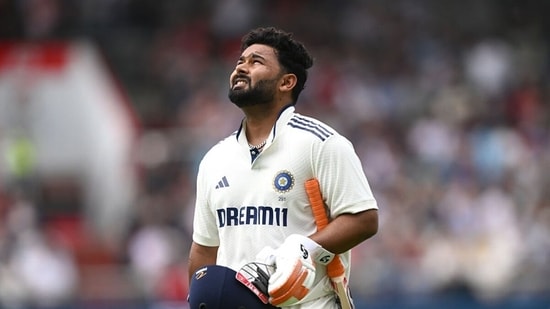
In a move that has sent ripples through the cricketing world, former India star Mohammad Kaif has openly criticized the decision to remove Rishabh Pant as the Test vice-captain. Kaif, known for his candid insights, didn’t hold back, asserting that Pant, a proven match-winner, has made “zero mistakes” in his red-ball career and “deserves better” treatment from the selectors. The unexpected change, occurring just before India’s one-off Test against Afghanistan, has ignited a fresh debate about leadership roles and player development within the Indian team.
### The Shocking Demotion
Rishabh Pant, the dynamic wicketkeeper-batsman, found himself unceremoniously stripped of the Test vice-captaincy. This decision comes after a period where Pant was increasingly seen as a future leader for Indian cricket. His previous stints in the leadership group included serving as vice-captain during India’s tour of England last year and even leading the side in a Test match against South Africa. These appointments were widely interpreted as clear signals that the team management was grooming him for a long-term, significant role in the Test format. The sudden reversal has left many observers, including Kaif, questioning the rationale behind such a pivotal shift.
### Kaif’s Unwavering Support for Pant
Mohammad Kaif’s comments underscore a strong belief in Pant’s capabilities and character. Kaif’s argument is simple yet powerful: Pant has consistently delivered in Test cricket, particularly under pressure. The notion that he has made “zero mistakes” in his red-ball career, while perhaps a slight exaggeration for emphasis, highlights Kaif’s view that Pant’s performances have been exemplary and his value to the team immense. For Kaif, a player of Pant’s caliber, who has single-handedly won India Tests with his audacious batting, warrants more trust and stability in leadership roles, not less. His statement resonates with many fans who view Pant as an irreplaceable asset in the longest format of the game.
### Pant: The Test Match-Winner India Needs
To truly understand Kaif’s strong stance, one must look at Rishabh Pant’s extraordinary Test record. He isn’t just a wicketkeeper-batsman; he’s a game-changer. His aggressive, fearless approach has often turned the tide in India’s favor from seemingly impossible positions. Think of his heroics at the Gabba, which famously led India to a historic series win in Australia, or his centuries in England and South Africa, often scored when the team was in deep trouble. These aren’t just statistics; they are memories of defiance and triumph. Pant embodies a modern, fearless approach to Test cricket, a style that India has increasingly embraced, especially overseas. His ability to disrupt opposition plans with quickfire innings makes him one of India’s most valuable commodities in Test cricket.
### The Role of a Vice-Captain
The vice-captaincy in any cricket team carries significant weight. It’s often viewed as a stepping stone to future captaincy, a period for a player to learn the ropes, understand strategic nuances, and develop leadership qualities under the guidance of the primary captain. For Pant, receiving the vice-captaincy previously was a clear indication that the selectors saw him as a leadership candidate for the future. It suggested a commitment to his growth in that aspect. Removing him from this position not only takes away that opportunity but also sends a confusing message about the team’s long-term leadership vision. It raises questions about whether the selectors’ initial assessment of his leadership potential has changed, and if so, why.
### KL Rahul’s Return to the Leadership Fold
The decision to replace Pant saw the return of KL Rahul to the leadership group. Rahul, who has captained India in various formats, including Tests, steps back into a prominent role. While Rahul is an experienced campaigner and has led the IPL franchise Lucknow Super Giants (LSG), the timing of this switch has sparked considerable discussion. Many were under the impression that the team was looking to diversify its leadership pool, nurturing players like Pant for future responsibilities. Rahul’s re-entry, while understandable given his experience, shifts the dynamic and may suggest a more immediate focus on established leaders rather than continued grooming of younger talents for Test leadership.
### Why the Change, Why Now?
The lack of an explicit public explanation for Pant’s demotion has fuelled speculation. Is it a tactical decision ahead of a specific series? Is it related to his form, despite his match-winning capabilities in Tests? Or is it simply a re-evaluation of leadership roles, prioritizing certain individuals over others for reasons undisclosed? Kaif’s “zero mistakes” comment implies that performance isn’t the issue. Whatever the underlying reasons, transparency in such critical leadership decisions often helps manage expectations and maintain morale within the squad and among the fan base.
### Why This Matters
This episode is more than just a change in a player’s designation; it reflects on the stability and clarity of India’s long-term leadership strategy in Test cricket. For fans, it raises questions about how promising young leaders are nurtured and whether consistency is prioritized. For Rishabh Pant, it could be a psychological setback or a moment for introspection, though knowing his resilient nature, he will likely let his bat do the talking. Ultimately, these decisions impact team dynamics, player morale, and the messaging around who India envisions at the helm in the years to come.