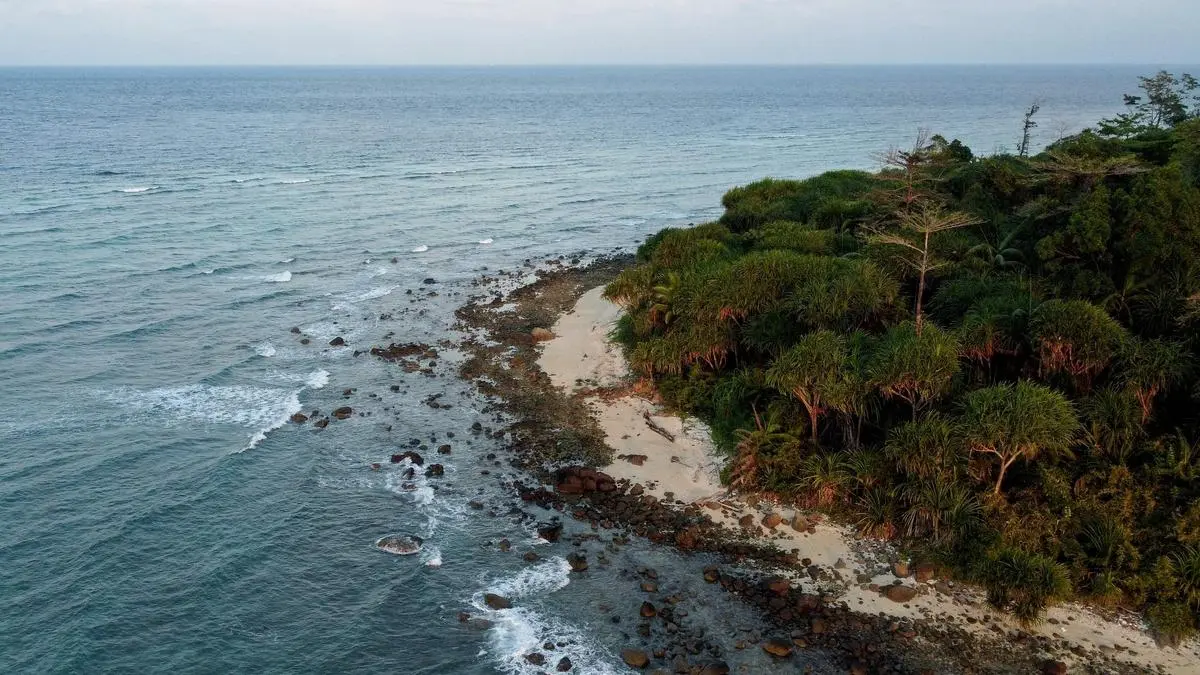
Imagine a remote island, a green jewel floating in the Andaman Sea, teeming with life found nowhere else on Earth. Now, picture bulldozers tearing into its ancient forests, making way for a colossal $9 billion megaport, an airport, and an entire new city. This isn’t a dystopian novel; it’s the unfolding reality on India’s Great Nicobar Island, and a growing chorus of over 200,000 people is demanding it stops.
Paradise Under Pressure
Great Nicobar, part of India’s Andaman and Nicobar Islands archipelago, is more than just a dot on the map. It’s a vital biodiversity hotspot, home to unique ecosystems, rare species, and some of the world’s last isolated tribal communities. For decades, its wild beauty has remained largely untouched, a natural sanctuary where life thrives in delicate balance.
But this tranquility is now under immense threat. The Indian government has greenlit an ambitious, eye-wateringly expensive development plan – a staggering Rs. 81,000-crore project designed to transform the island. This isn’t just about a port; it’s about building a residential township, multiple hotel complexes, and an international airport, fundamentally altering the island’s landscape forever.
A Petition Ignites a Movement
The scale of this proposed change has struck a deep chord with environmentalists, conservationists, and concerned citizens across India and beyond. On May 20, 2026, organizers announced that a Change.org petition, demanding an immediate halt to the Great Nicobar development, had surged past 209,500 verified signatures.
This isn’t just a digital tally; it represents a powerful, collective voice. The petition, launched under the “Save Earth — Stand for Change” initiative by Dr APJ Abdul Kalam PURA, isn’t holding back. It directly appeals to the highest offices in India: the President, the Prime Minister, the Ministry of Environment, Forest and Climate Change, and the National Board for Wildlife. Their message is clear: withdraw these plans before it’s too late.
The Unfolding Crisis: Deforestation and Displacement
The concerns raised by the petitioners are stark and severe. At the forefront is the looming threat of mass deforestation. Satellite images, like the one captured near Campbell Bay on March 25, 2026, already hint at the early stages of this transformation. Miles of irreplaceable ancient forest are slated for clearance, wiping out critical habitats and disrupting ecological processes that have evolved over millennia.
Beyond the trees, there’s a human element that cannot be ignored: tribal displacement. Great Nicobar is home to indigenous communities, including the Shompen, who are among the most isolated people on Earth. Their way of life is inextricably linked to the forest and its resources. A project of this magnitude would shatter their traditional livelihoods, cultural identity, and potentially their very existence, raising serious ethical and human rights questions.
A Biodiversity Bomb
Environmental experts warn that the project could trigger an ecological catastrophe. Great Nicobar is recognized globally for its unparalleled biodiversity. It harbors a stunning array of flora and fauna, many of which are endemic – meaning they exist nowhere else. The destruction of forests for concrete infrastructure would not only obliterate these unique habitats but also contribute to significant carbon emissions, undermining global climate efforts.
The island’s coastal ecosystems, including coral reefs and mangrove forests, are also at severe risk from port construction and increased human activity. These fragile environments act as natural barriers against storms and tsunamis, while also serving as crucial nurseries for marine life. Damaging them could have far-reaching consequences for the entire Andaman Sea region.
Why This Matters
The Great Nicobar Project isn’t just a local issue; it’s a global litmus test for sustainable development. It forces us to confront the difficult balance between economic aspirations and ecological preservation, between human progress and the intrinsic value of wild places. The voices rising in protest are a reminder that the planet’s precious biodiversity and the rights of its most vulnerable communities cannot be sacrificed for development at any cost. This debate is a critical moment for India and for the world, demanding careful consideration and a truly sustainable path forward.