
Punjab is buzzing, and not in the way the Aam Aadmi Party (AAP) would prefer. With the 2027 Assembly elections expected early next year, the ruling party finds itself battling a perfect storm of challenges: high-profile defections, escalating scrutiny over alleged corruption, persistent questions about leadership, and a simmering unease over law and order. All of this plays out in a border state where governance isn’t just about policy, but national security. The BJP, meanwhile, is watching from the wings, ready to seize any opportunity in this volatile landscape.
AAP’s Troubled Horizon
Just a few years ago, the Aam Aadmi Party swept into power in Punjab with a landslide victory, promising a new era of governance free from traditional political baggage. Now, that shine appears to be dimming. The party, led by Chief Minister Bhagwant Mann, is struggling to defend its track record amidst a cascade of internal and external pressures that threaten to unravel its hold on the state. The political temperature is rising, and the electorate, known for its decisive swings, is watching closely.
The Defection Drain: Cracks in the Ranks
Perhaps one of the most visible signs of internal strife within AAP is the increasing number of defections. Sources close to the party suggest a growing unease among some senior parliamentarians and local leaders, many of whom feel sidelined or disillusioned with the party’s direction. While specific names are often kept under wraps until official announcements, the whispers of dissatisfaction are loud.
These aren’t just minor exits; the departure of influential figures can chip away at the party’s grassroots support and give ammunition to the opposition. For a party that prided itself on its unity and outsider status, these defections signal a deeper malaise, hinting at struggles with internal democracy, unmet expectations, or perhaps, simply political opportunism as the next election cycle draws nearer.
Under the ED Scanner: Corruption Allegations Mount
“Institutional scrutiny” is a polite term for what many perceive as a targeted crackdown. The Enforcement Directorate (ED) and other central agencies have reportedly intensified their investigations into alleged corruption involving several ministers and high-ranking officials within the AAP government. While details remain officially under wraps, the constant stream of headlines and summons has created an atmosphere of suspicion and distrust.
This isn’t just about individual officials; it casts a long shadow over the entire administration. For a party that campaigned fiercely against corruption, these allegations are particularly damaging. They fuel the narrative that AAP, once the anti-corruption crusader, is now succumbing to the very same flaws it vowed to eradicate. The optics alone are problematic, distracting the government from its reform agenda and forcing it to spend valuable political capital defending itself.
Leadership in Question: Delhi’s Shadow, Punjab’s Future
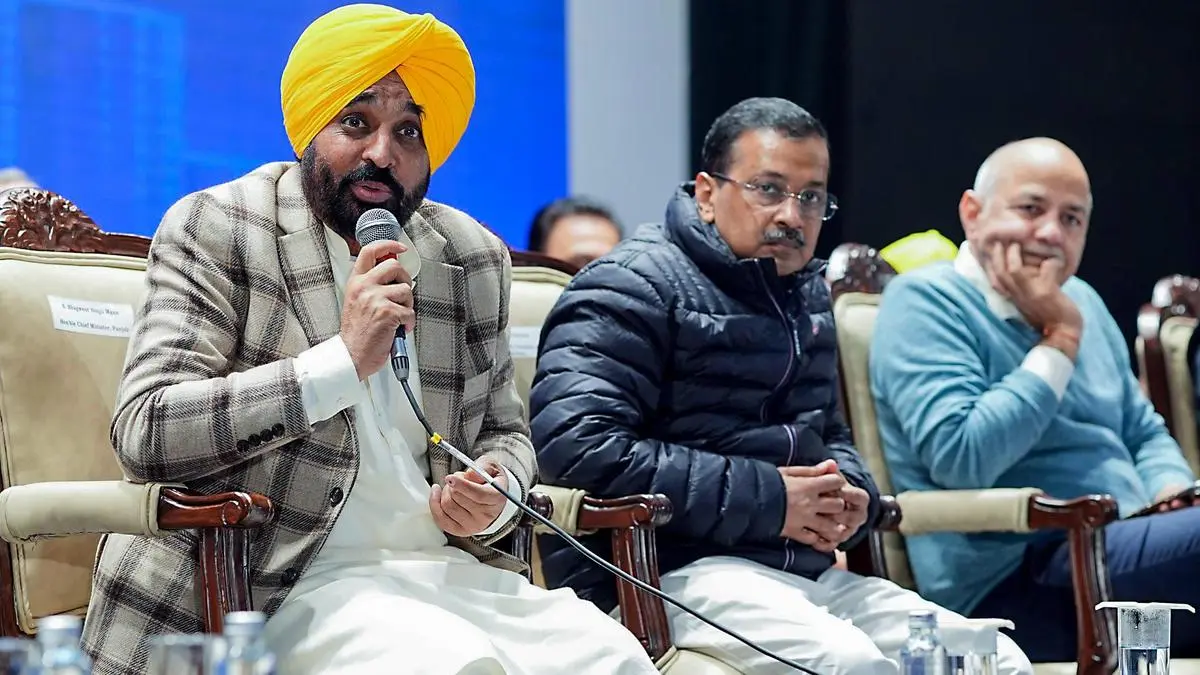
The leadership dynamic within AAP in Punjab is also under scrutiny. While Bhagwant Mann is the Chief Minister, the shadow of the party’s national convener, Arvind Kejriwal, and other senior leaders from Delhi, looms large. The recent photo showing CM Mann alongside Kejriwal and the jailed Manish Sisodia (present via a digital backdrop perhaps or a past photo used as a reference point) at an internal party event, while intended to show unity, also underscores the perceived influence of the central leadership.
Critics often question how much autonomy Mann truly has, or whether key decisions are still being dictated from Delhi. Furthermore, with Kejriwal and Sisodia themselves facing legal challenges in Delhi, their own battles inevitably cast a pall over the party’s national image, impacting its state units. For Punjab, a state with a strong sense of regional identity, questions about local leadership and its independence are always politically sensitive.
The Shadow of Security: A Border State’s Unique Fears
In a state bordering Pakistan, law and order is never just a domestic issue; it’s a matter of national security. Persistent concerns over public safety, cross-border infiltration, and potential radicalization efforts have always been potent political tools in Punjab. The AAP government has faced ongoing criticism regarding its handling of these issues, with opposition parties frequently alleging a breakdown in law enforcement.
From challenges in managing drug trafficking to concerns over communal harmony, the government’s ability to maintain peace and stability is under constant observation. Any perceived weakness in this crucial area can have an “unusual political impact,” as the article notes, resonating deeply with a populace that remembers past periods of instability and values security above all else.
BJP’s Strategic Play: Exploiting the Cracks
The Bharatiya Janata Party (BJP), historically a minor player in Punjab politics, sees an unprecedented opportunity in AAP’s current predicament. Often perceived as an urban-centric party with limited rural reach, the BJP is now actively working to expand its footprint by exploiting the ruling party’s vulnerabilities. They are amplifying narratives around corruption, questioning AAP’s governance, and positioning themselves as a strong alternative for stability and development.
By highlighting the alleged failures of the current administration, and by drawing a contrast with their national governance model, the BJP hopes to woo disaffected voters and consolidate support, especially among those wary of the perceived chaos in the state’s political landscape. Their strategic focus on Punjab suggests a long-term play, aiming to emerge as a significant force in the upcoming elections.
Why This Matters
The unfolding political drama in Punjab isn’t just local news; it’s a critical barometer for national politics. AAP’s struggles could redefine its national ambitions, while the BJP’s aggressive push signals a shifting power dynamic in a strategically vital border state. For Punjabis, the stakes are even higher: their votes will determine not just the next government, but potentially the very trajectory of governance, security, and economic development for years to come. The next election cycle promises to be one of the most fiercely contested and impactful in recent memory.