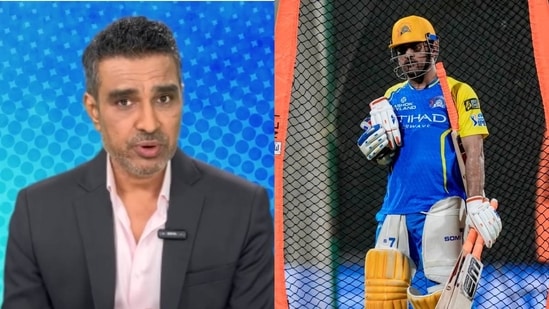
The Chennai Super Kings (CSK) fan base has always been a unique entity, fueled by an unwavering devotion to its talisman, MS Dhoni. But as IPL 2026 unfolded, a cloud of speculation and yearning around Dhoni’s return overshadowed much of the team’s on-field narrative. Now, former India cricketer and seasoned pundit Sanjay Manjrekar has stepped into the fray with a stark assessment, suggesting CSK might have prioritized emotion over strategic clarity, calling the entire Dhoni situation their “harshest lesson” of the season.
The Enduring Dhoni Mystique
MS Dhoni isn’t just a player for CSK; he’s the very soul of the franchise. An icon, a captain, and an emotion wrapped into one, his presence – even in absence – commands unparalleled attention. This season was a testament to that enduring mystique. Despite not making a single appearance on the field throughout IPL 2026, Dhoni continued to dominate headlines and fuel a relentless fan frenzy. Every whisper, every sighting, became a national talking point.
The fever pitch truly hit when Dhoni was finally spotted at Chepauk on a CSK matchday. Hopes soared, social media exploded, and the possibility of a grand return seemed imminent. But the euphoria was short-lived, quickly deflated by reports confirming yet another injury setback, relegating him to the sidelines once more. For many, it felt like a prolonged saga, a constant push and pull between hope and disappointment.
Manjrekar’s Blunt Assessment: “Lost Interest”
While the sight of Dhoni at the stadium was enough to send fans and experts into a speculative frenzy, Sanjay Manjrekar admitted a refreshing bluntness: he had “completely lost interest in the whole saga.” This wasn’t merely disinterest but a critical take on how the situation had unfolded, bordering on a perceived distraction.
Manjrekar’s comments cut through the sentimentality, suggesting a deeper issue at play within the CSK camp. His assertion that CSK “sacrificed reality for MS Dhoni sentiment” points to a situation where the team’s strategic decisions, or lack thereof, might have been swayed by the immense emotional attachment surrounding their legendary former captain.
Sentiment vs. Reality: A Strategic Minefield
What exactly does it mean to sacrifice reality for sentiment? For Manjrekar, it implies that the team might have held onto the *idea* of Dhoni, rather than focusing purely on the practicalities of team composition, performance, and future planning in his absence. When a franchise’s “heartbeat” is sidelined, the immediate challenge is to adapt, find new leaders, and build a winning combination.
The constant hope and subsequent dashed expectations around Dhoni’s return could have, arguably, created an unstable environment. It raises questions about whether enough clarity was provided internally and externally, allowing the focus to drift from the active players on the field to the phantom presence of a legend off it. Such a scenario can be incredibly taxing on a team’s morale and overall strategy, potentially leading to indecision or a reluctance to fully commit to alternative plans.
A Season of Ups and Downs: The “Harshest Lesson”
CSK’s season was described as “blowing hot and cold,” a common IPL narrative for teams struggling for consistent form. Manjrekar connected this fluctuating performance directly to the “mishandling of the MS Dhoni saga,” calling it the team’s “harshest lesson.”
A team that blows hot and cold often lacks a clear identity or consistent momentum. Could the ongoing speculation about Dhoni have contributed to this inconsistency? It’s plausible. When the focus is divided, and the team’s direction seems to be constantly waiting for a legendary figure to return, it can impact player confidence, tactical execution, and overall cohesion. The “harshest lesson” might be the realization that even the strongest emotional ties must eventually yield to the pragmatic demands of professional sport. The uncertainty, the endless debates – these could have quietly chipped away at CSK’s ability to forge a steady path.
“Doesn’t Matter If He Plays The Last Game”
Perhaps Manjrekar’s most pointed remark was that “it doesn’t matter if he plays the last game.” This statement isn’t a dismissal of Dhoni’s legacy or importance; rather, it underscores the need for a franchise to look beyond individual sentiment, even for its greatest legends. By the season’s end, especially given his sustained absence, the core message is that CSK needed to establish itself as a formidable unit *without* relying on the possibility of Dhoni’s return, however fleeting.
His comment suggests that the value of a symbolic appearance, while emotionally resonant, might be strategically negligible in the grand scheme of team building and competitive performance. For a team to truly move forward, it must embrace its current reality and build for the future, rather than clinging to past glories or the fleeting hope of a magical comeback. The team’s evolution, its quest for sustained success, must ultimately transcend the individual, no matter how iconic.
Why This Matters
Manjrekar’s comments highlight the perennial challenge faced by sports franchises: how to balance the deep emotional connection with legendary players against the ruthless pragmatism of professional sport. It’s a reminder that while sentiment fuels passion, strategic clarity and future-oriented planning are essential for sustained success, especially when transitioning away from an era-defining figure. For CSK, navigating the post-Dhoni landscape isn’t just about finding a new captain; it’s about redefining their identity.