Move over, traditional narratives! The recently concluded Assembly elections in Kerala, Tamil Nadu, West Bengal, and Assam have sent a clear message echoing across India: women voters aren’t just participants; they are decisive powerhouses, actively shaping electoral outcomes and challenging long-held political assumptions. Their high turnout and distinct voting patterns have become the ultimate game-changer, forcing parties to rethink strategies and policies.
The Unstoppable Rise of the Woman Voter
For years, political pundits have acknowledged the growing participation of women in India’s democratic process. But these latest elections, held in May 2026, solidify their status as an electorally consequential segment. In state after state, women’s turnout remained remarkably high, often surpassing that of men. This isn’t just about showing up; it’s about making a statement, turning preferences into mandates, and truly leading the charge on election day.
Kerala: Urban Women Tilt the Scales for UDF
In the picturesque state of Kerala, the gender voting patterns revealed a significant shift, particularly among urban women. The data shows a decisive lean towards the United Democratic Front (UDF), with approximately 48 percent of women voters backing the alliance. In contrast, the Left Democratic Front (LDF) garnered support from about 36 percent of women, and the National Democratic Alliance (NDA) from 14 percent.
While men also favored the UDF, the magnitude of women’s support was particularly striking, highlighting their critical role in solidifying the UDF’s position. This trend suggests that specific issues or promises resonated strongly with Kerala’s female electorate, especially those in urban centers, making their collective vote a powerful force in the state’s political landscape. Parties here will undoubtedly be dissecting what exactly clicked with this crucial demographic.
Tamil Nadu: Young Women Energize TVK’s Victory
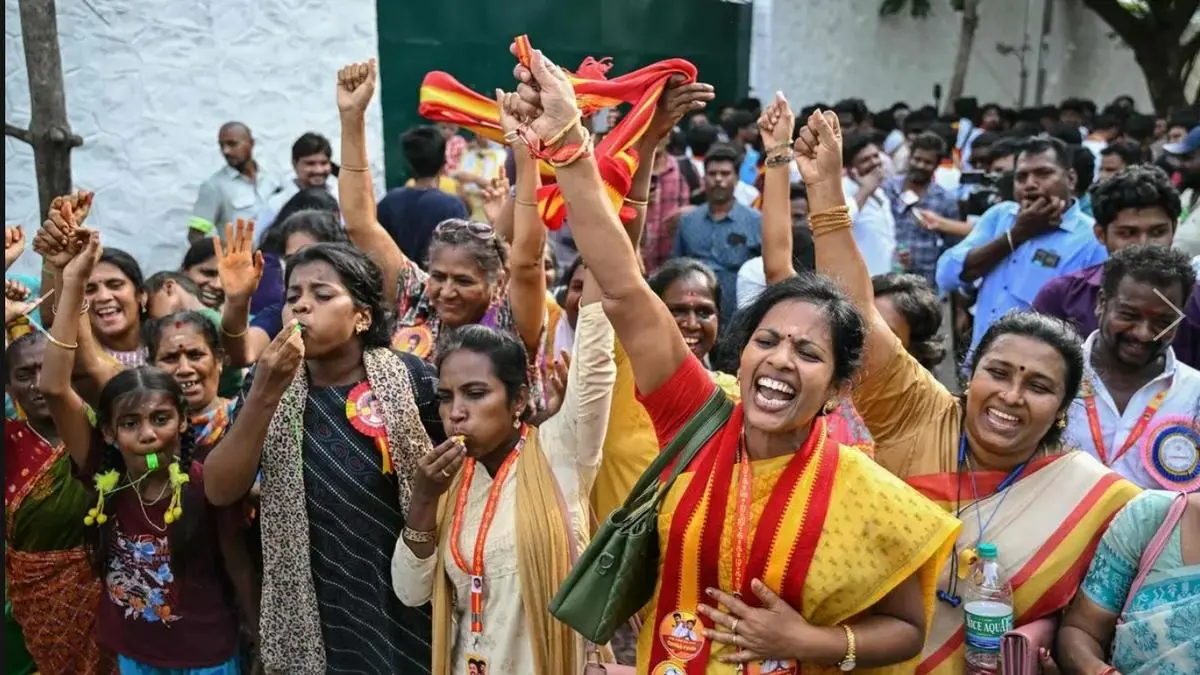
Down south in Tamil Nadu, the Tamilaga Vetri Kazhagam (TVK) celebrated a momentous victory, and behind their triumph stood a significant wave of support from women, especially young women. Images of women cheering the TVK’s success on May 4th in Chennai perfectly encapsulate this enthusiasm.
This dynamic illustrates how a particular demographic within the broader female electorate can act as a catalyst for political change. The energy and backing from young women voters were instrumental in lifting TVK to power, indicating that their aspirations, concerns, and vision for the future found a strong voice in the new ruling party. This isn’t just about general female support; it’s about targeted engagement with specific segments of the population that can produce astonishing results.
West Bengal: BJP Narrows the Gap with Female Support
Moving east, West Bengal presented another fascinating narrative where gender voting patterns played a pivotal role. The data suggests that the Bharatiya Janata Party (BJP) made significant strides in narrowing the gap with its competitors, and women voters were key to this progress. While the full extent of their support for the BJP would require deeper analysis, the indication is clear: the BJP’s outreach and messaging resonated with a substantial portion of the female electorate.
This particular trend has profound implications for the political future of West Bengal. It signals that women voters, once considered a more stable vote bank for traditional parties, are increasingly open to considering alternative political options. Their evolving choices are compelling all parties to tailor their campaigns more effectively to address the unique needs and aspirations of women across the state.
Assam: A Common Thread of Female Influence
While specific figures for Assam weren’t detailed in the immediate post-election analysis, the state was equally part of this broader phenomenon. Across all four states – Kerala, Tamil Nadu, West Bengal, and Assam – the central theme remained consistent: women’s high voter turnout and their distinctive voting patterns were fundamental to the outcomes. Their collective presence at the ballot box is no longer a footnote but a headline, demonstrating an active and informed participation that is reshaping electoral calculations everywhere.
Why This Matters
This isn’t just political trivia; it’s a fundamental shift in India’s democratic fabric. The increasing assertiveness of women voters means political parties can no longer rely on traditional strategies or take any demographic for granted. They must now actively court the female vote, understand their diverse needs, and craft policies that genuinely address issues ranging from economic empowerment and safety to healthcare and education. Ignoring this powerful demographic comes at a serious political cost. The future of Indian politics will increasingly be determined by who best understands, engages, and empowers its women.