
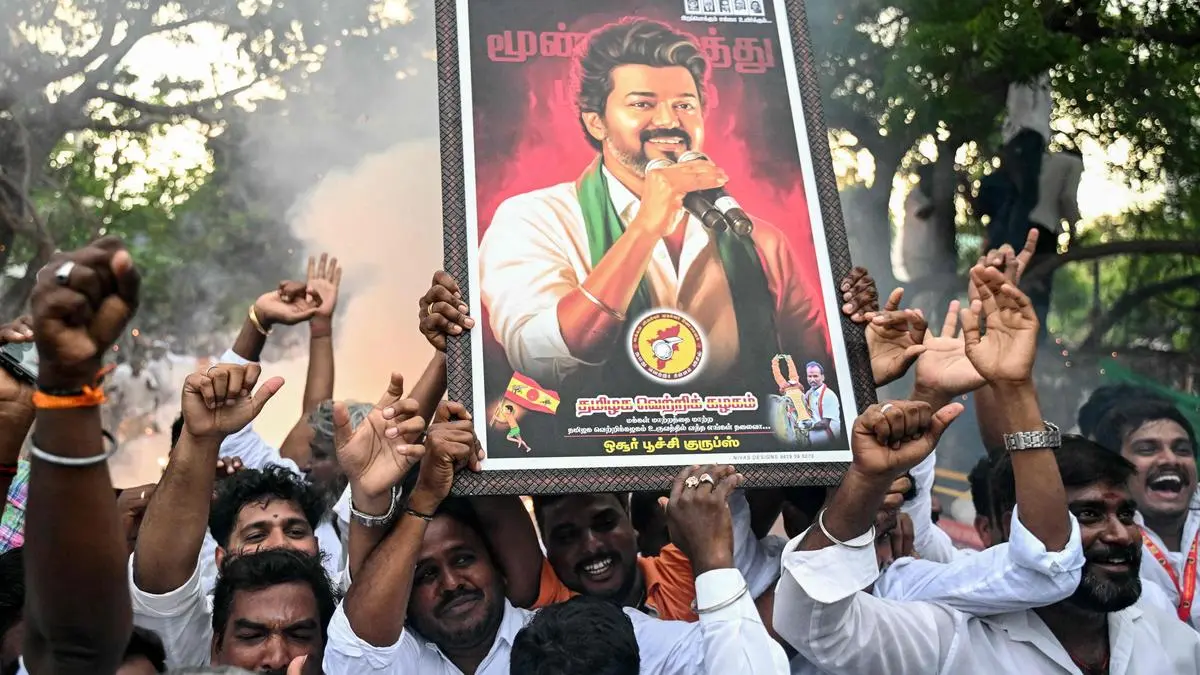
Chennai vibrated with an unexpected energy on May 8th as supporters of the Tamilaga Vettri Kazhagam (TVK) erupted in joyous celebration. The scenes across the state, particularly in urban centers, were a testament to a political earthquake that had just reshaped Tamil Nadu’s landscape. Political observers, seasoned analysts, and even the most seasoned pollsters were left reeling – a new player had not just entered the arena, but had seized control in a stunning display of political prowess.
### The Unforeseen Triumph
While several exit polls hinted at a respectable showing for the TVK, the sheer scale of their victory was genuinely unanticipated. When the final numbers rolled in, the TVK had secured a remarkable 108 seats, commanding an impressive 34.92 percent of the total vote. This wasn’t just a decent debut; it was a landslide that positioned the TVK as the single largest party in the state. For a new political entity, this kind of breakthrough is almost unheard of in Tamil Nadu, a state long defined by its entrenched political giants.
### A Shattered Legacy
For decades, Tamil Nadu’s political narrative has been a tightly woven tapestry dominated by two formidable entities: the Dravida Munnetra Kazhagam (DMK) and the All India Anna Dravida Munnetra Kazhagam (AIADMK). These parties have historically dictated the state’s political direction, creating a duopoly that seemed almost unshakeable. Any new entrant typically struggled to gain a foothold, let alone challenge the established order. The TVK’s sudden rise is, therefore, not just a win, but a profound shift, signaling a new chapter in Tamil Nadu’s storied political history. It’s a moment that will undoubtedly be studied for years to come, marking a significant re-alignment of political power.
### Who Voted for Change?
The post-poll data from PollsMap, an independent research firm, offers crucial insights into the TVK’s unexpected success. The party’s appeal wasn’t monolithic; rather, it tapped into a diverse pool of voters yearning for something different. A significant portion of the TVK’s support base came from a broad swathe of dissatisfied voters – individuals who, for various reasons, felt disenfranchised or underserved by the traditional political options. Their votes were a clear mandate for a fresh approach, a break from the cyclical politics they had grown accustomed to.
### The Youth and Urban Edge
Beyond general discontent, the TVK strategically resonated with specific demographic groups. The data highlights a strong leaning from young, urban, and women voters. These groups, often more receptive to new ideas and less tethered to historical party loyalties, found an appeal in the TVK’s message and its leader, Vijay. For them, the traditional promises and rhetoric of the DMK and AIADMK might have felt stale or insufficient to address their contemporary concerns. They represent a forward-looking segment of the electorate, often seeking innovative solutions and transparent governance.
The fact that these vital demographics “did not fully trust any established party” is particularly telling. It speaks to a growing cynicism towards conventional politics, a desire for authenticity, and perhaps a more direct, less hierarchical form of leadership. Vijay’s public persona and the TVK’s fresh platform seemingly filled this void, offering an alternative that felt both genuine and capable of delivering on its promises, or at least, felt more aligned with their aspirations for the future.
### Looking Ahead: What This Means
The TVK’s stunning performance doesn’t just mark a victory; it fundamentally alters the political calculus in Tamil Nadu. The established parties, the DMK and AIADMK, now face an unprecedented challenge. They must critically assess why they lost significant ground to a newcomer and adapt their strategies to compete in this new multi-polar political environment. For the TVK, the challenge shifts from winning power to governing effectively and consolidating their gains. The expectations are sky-high, particularly from the young, urban, and women voters who championed their rise. This breakthrough signals a dynamic period for Tamil Nadu politics, promising more competitive elections and perhaps a greater focus on issues that resonate with a younger, more diverse electorate.
### Why This Matters
The TVK’s rise in Tamil Nadu is a powerful reminder that political landscapes are never static. It showcases how voter dissatisfaction, coupled with a compelling new voice, can dismantle long-standing political hegemonies. This event could inspire similar movements in other states and serves as a crucial case study for understanding evolving voter behavior, especially among younger generations and women, who are increasingly demanding genuine alternatives to traditional political establishments. It’s a victory for change, and a wake-up call for every established party across India.