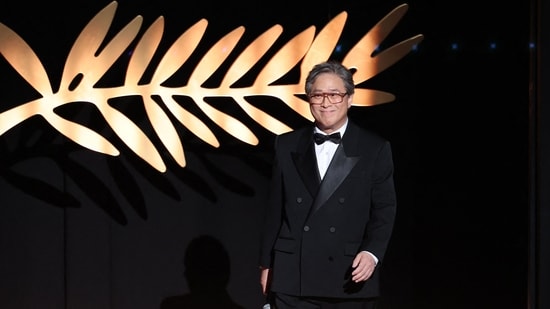
The French Riviera is buzzing, celebrities are gracing the red carpet, and the scent of cinematic anticipation hangs heavy in the air as the 79th Cannes Film Festival kicks off. But amidst the glamour and grand premieres, it was the opening remarks from this year’s jury president, South Korean maestro Park Chan-wook, that truly set a thought-provoking tone. The acclaimed director behind global hits like *Oldboy* and *The Handmaiden* wasted no time in addressing a perennial debate, firmly stating that he believes politics and art are far from conflicting entities.
Setting the Scene: Cannes and Its New Leader
The iconic Palais des Festivals is once again the epicenter of the global film world, hosting a dazzling array of filmmakers, stars, and industry professionals from May 12th. At the helm of the prestigious jury that will award the coveted Palme d’Or – the festival’s highest honor – sits Park Chan-wook, a filmmaker renowned for his distinctive visual style, intricate narratives, and often dark, philosophical explorations of human nature. His appointment as jury president brings an undeniable gravitas to this year’s proceedings, and his initial comments have immediately sparked conversation.
Art as a Mirror: Park Chan-wook’s Vision
During the opening press conference, Park Chan-wook didn’t just casually dismiss the idea of conflict; he passionately defended the inherent political weight artistic expression can carry. For a director whose films often delve into societal ills, moral ambiguities, and the darker corners of the human psyche, this stance is hardly surprising. His work frequently uses extreme scenarios to comment on power structures, justice, and revenge, inherently making a political statement without explicitly campaigning.
“I don’t feel politics and art are in conflict with each other,” he conveyed to the gathered press. This statement resonates deeply within the artistic community, suggesting that cinema, far from being an escapist fantasy, serves as a powerful medium for critical engagement with the world around us. It implies that every story, every character, every setting inherently carries a viewpoint, reflecting or challenging the status quo.
The Power of Perspective on Screen
In a world increasingly shaped by geopolitical shifts, social unrest, and ideological divides, the role of film as a form of commentary feels more vital than ever. Park’s assertion champions the idea that filmmakers have not only the right but perhaps even a responsibility to weave political threads into their narratives. Whether subtly or overtly, a film can hold a mirror up to society, provoke thought, challenge norms, or simply offer a perspective that might otherwise go unheard.
Think of films that have shaped public discourse, from early social realist dramas to contemporary documentaries tackling climate change or human rights. These works aren’t just entertainment; they’re cultural artifacts that capture and influence the political consciousness of their time. Park Chan-wook, through his statement, affirms this tradition, encouraging a deeper appreciation for cinema’s potential beyond mere spectacle.
Cannes: A Platform for Global Voices
The Cannes Film Festival itself has a long history of being a platform for politically charged films. It often showcases narratives that push boundaries, address pressing global issues, and give voice to marginalized communities. From historical dramas about resistance movements to contemporary stories exploring migration, poverty, or authoritarianism, the festival is a melting pot of diverse perspectives.
Park Chan-wook’s leadership, therefore, signals a potential embrace of films that aren’t afraid to engage with difficult truths. His personal filmmaking philosophy aligns perfectly with Cannes’ historical commitment to artistic freedom and bold storytelling, promising a vibrant discussion throughout the festival about the interplay between creative expression and the world’s complex realities.
A Director’s Enduring Legacy
Park Chan-wook’s filmography is a testament to his belief. While known for his visually stunning and often brutal narratives, his films like *Oldboy*, *Thirst*, and *The Handmaiden* are rarely just about the surface plot. They explore themes of societal oppression, psychological trauma, class struggle, and liberation. His movies are not just entertainment; they are experiences designed to provoke, challenge, and leave a lasting impression, often forcing audiences to confront uncomfortable truths about humanity and its systems. His words at Cannes add another layer to understanding his profound impact on contemporary cinema.
Why This Matters
Park Chan-wook’s statement at Cannes is more than just an opinion from a famous director; it’s a powerful affirmation for filmmakers, critics, and audiences worldwide. It legitimizes the idea that art isn’t meant to exist in a vacuum, separate from the realities of our lives. By declaring that politics and art are not in conflict, he encourages a deeper engagement with cinema, viewing it not just as a form of escapism but as a vital tool for understanding, questioning, and shaping our world. In an era where cultural debates are often simplified, his nuanced perspective serves as a crucial reminder of art’s enduring power and relevance.