The political landscape of West Bengal just got a monumental shake-up, and it seems the excitement isn’t limited to the political corridors. Bengali cinema superstar Jeet, known for his compelling performances and significant box office pull, has openly voiced his profound hopes for the state following the historic swearing-in of Suvendu Adhikari as Chief Minister. This pivotal moment marks the first time the Bharatiya Janata Party (BJP) has formed a government in West Bengal, ushering in an era pregnant with anticipation and change.
A New Chapter for West Bengal
Saturday, May 10, 2026, etched itself into the annals of West Bengal’s history. As BJP legislature party leader Suvendu Adhikari took his oath, surrounded by dignitaries and a palpable sense of occasion, the moment symbolized a seismic shift. For decades, the political narrative of this culturally rich state has been dominated by other formidable forces – from the enduring legacy of the Left Front to the more recent era of the Trinamool Congress. Now, with the saffron party at the helm, the air is thick with speculation and, for many, a renewed sense of possibility.
This transition isn’t just about a change of power; it reflects a deep desire among segments of the populace for fresh perspectives and a different developmental trajectory. The BJP’s ascent in a state historically resistant to its ideology underscores a powerful yearning for change, setting the stage for what many hope will be a transformative period.
Jeet’s Vision: A Call for Revival
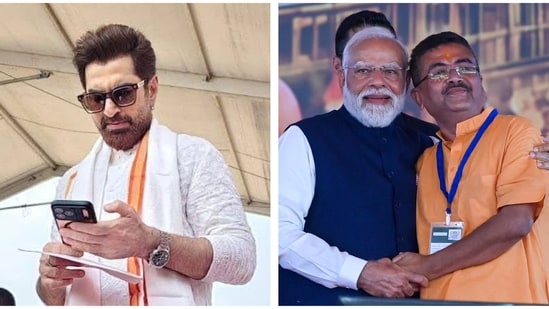
Amidst the political luminaries, the presence of figures from the Bengali film industry, affectionately known as Tollywood, was particularly noteworthy. Jeet, a household name and one of the industry’s most bankable stars, was among them. His candid remarks about the state’s future quickly resonated, particularly his sentiment: “Over the years the pride was diminished in the eyes of many.”
This isn’t merely a casual observation; it’s a powerful statement from a beloved public figure, hinting at underlying frustrations and a yearning for restoration. What might Jeet be referring to when he speaks of diminished pride? It’s a phrase that could encompass a range of concerns that have often plagued West Bengal: the challenges of industrial growth, the struggle to retain skilled talent who seek opportunities elsewhere, or even a sense of cultural stagnation despite the state’s vibrant artistic heritage. For many, this “diminished pride” speaks to a collective feeling of the state not living up to its immense potential, whether in terms of economic prosperity, governance, or social cohesion.
Jeet’s hope for a “new dawn” under the BJP government thus translates into a deep-seated wish for a return to glory, a period of renewed development, stability, and a boost to the state’s economic and cultural standing. His words carry the weight of public sentiment, articulating a desire for West Bengal to once again shine as a beacon of progress and opportunity.
Star Power and Political Stages
Jeet wasn’t alone in representing Tollywood at the historic ceremony. Other prominent figures like the legendary Prosenjit Chatterjee, acclaimed actress Mamata Shankar, and Payal Sarkar were also present. Their attendance at such a high-profile political event sends a clear message, transcending mere celebrity appearances.
When leading actors and cultural icons grace political stages, it often signifies more than just personal affiliation. It can be interpreted as a legitimization of the new political order, a signal that segments of the cultural elite are open to, or even actively supportive of, the change. Their presence adds a layer of public interest and glamour to the proceedings, helping to bridge the gap between governance and popular imagination. It also provides a visible endorsement that can influence public perception, highlighting the broad appeal and acceptance of the new government across various influential sectors of society. For a state like West Bengal, where culture and politics are deeply intertwined, such appearances are never just coincidental.
The Road Ahead: Hopes and Hurdles
With a new government comes a fresh wave of aspirations. For the people of West Bengal, these hopes typically revolve around tangible improvements: robust economic growth to create jobs for its youth, enhanced infrastructure to drive development, transparent governance, and a renewed focus on cultural preservation and promotion. The promises of a “new dawn” often conjure images of industrial revival, better educational opportunities, and a secure environment for all.
However, the path to fulfilling these expectations is rarely straightforward. Governance in a state as diverse and complex as West Bengal presents its own unique set of challenges. The new BJP government will face the daunting task of navigating high public expectations, addressing long-standing issues, and fostering unity across various communities. Jeet’s vision, echoed by many, requires sustained effort, strategic planning, and a collaborative spirit from all stakeholders. The “new dawn” won’t simply appear; it will need to be carefully nurtured through policy, practice, and persistent dedication.
Why This Matters
The sentiments expressed by a prominent figure like Jeet underscore the profound significance of West Bengal’s political transition. When cultural icons openly voice their hopes for a state’s future, it amplifies the public’s yearning for progress and signals the magnitude of the political shift. This moment isn’t just about a change of power; it’s about a collective dream for a stronger, more prosperous West Bengal, and the role of popular voices in shaping that narrative cannot be overstated. It marks a critical juncture where the confluence of politics, public expectation, and celebrity influence sets the stage for a compelling new chapter in the state’s journey.