
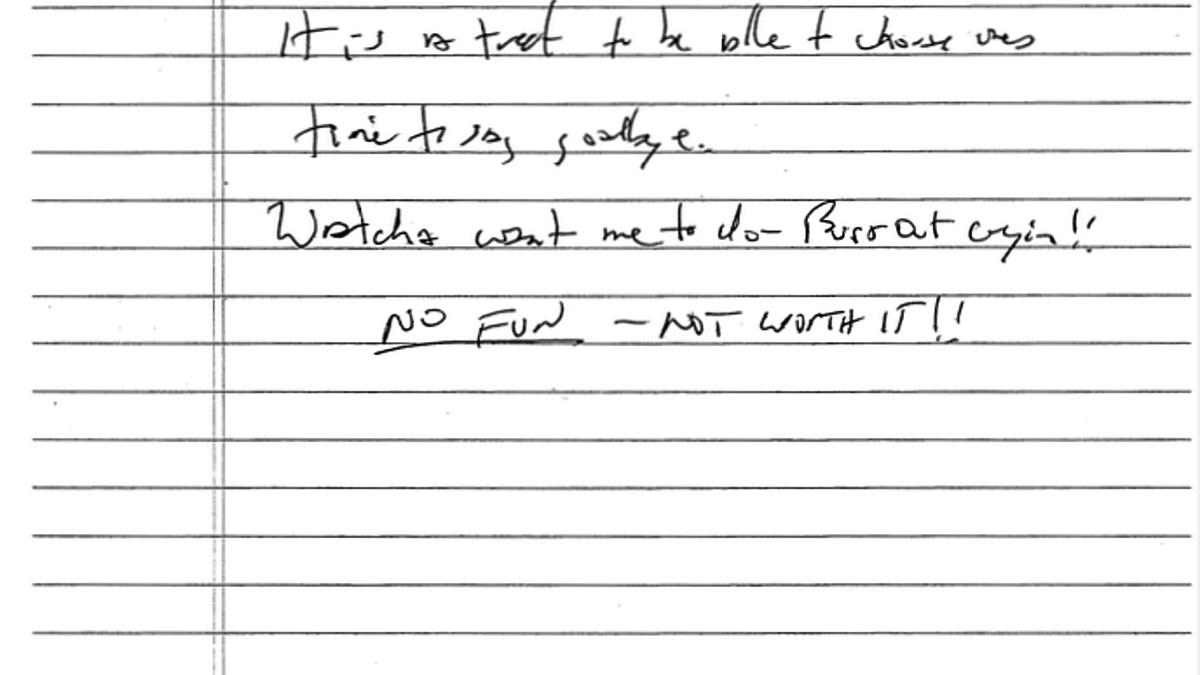
The saga of Jeffrey Epstein continues to unfold, years after his death, as new details and documents periodically surface, reigniting public fascination and controversy. The latest in this long line of revelations comes from a federal judge, who has released a handwritten note that Epstein’s cellmate claimed to have found shortly after the financier’s first suspected suicide attempt in a New York City jail. This small, scrawled piece of paper offers a fresh, albeit murky, glimpse into the final weeks of a man whose life and death remain steeped in conspiracy theories and unanswered questions.
### The Discovery at MCC
It was July 23, 2019, when the world first learned that Jeffrey Epstein, awaiting trial on federal sex trafficking charges, had been found injured in his cell at the Metropolitan Correctional Center (MCC) in New York. The incident was initially reported as a suspected suicide attempt, though some speculated it could have been an assault. Weeks before his eventual death by apparent suicide on August 10, 2019, this first event set off alarms and raised serious questions about the notoriously troubled federal facility.
In the immediate aftermath of that incident, Epstein’s cellmate at the time, Nicholas Tartaglione, a former police officer facing murder charges, reportedly discovered a note. Tartaglione, who was later transferred from MCC, maintained that he found the note, written on yellow paper, in their shared cell. This detail, kept under wraps for some time, has now been officially released by Judge Richard Berman as part of ongoing court filings related to the extensive legal fallout from Epstein’s case.
### A Glimpse Into Epstein’s Mind?
So, what did the note say? According to reports, the handwritten message contained a series of grievances, painting a bleak picture of life inside MCC. Epstein allegedly detailed complaints about the prison conditions, specifically calling out “a f*cking rat problem.” He also accused guards of providing him with “mouldy food.” But perhaps the most unsettling phrases were his claims of “constant humming” and, most chillingly, “they are trying to kill me.”
The brevity and starkness of the note immediately prompt a multitude of interpretations. Was this a genuine cry for help, a desperate plea from a man fearing for his life? Or was it a calculated maneuver, an attempt to manipulate perceptions and generate sympathy in the lead-up to his trial? Given Epstein’s notorious history of deception and manipulation, both possibilities weigh heavily on the minds of those trying to piece together the truth.
### The Cellmate’s Account and Its Context
Nicholas Tartaglione’s role in this particular facet of the Epstein saga is not insignificant. Tartaglione himself was a high-profile inmate, a former cop accused of four murders. His attorneys later leveraged the circumstances surrounding Epstein’s initial injury – and the note – as part of their arguments regarding the unsafe and neglectful conditions at MCC. They contended that if a man as wealthy and connected as Epstein could not be adequately protected, then conditions for all inmates were dire.
The note, Tartaglione claimed, was found by him and then passed along. His account of the discovery adds another layer of intrigue and, for some, suspicion. The veracity of his claim, and the circumstances under which the note was found and preserved, are undoubtedly being scrutinized by various parties involved in the ongoing investigations into Epstein’s death and the failings of MCC.
### More Questions Than Answers
The release of this note, even years after the fact, serves as a potent reminder of the enduring mystery surrounding Jeffrey Epstein. His death, officially ruled a suicide, has been the subject of intense public skepticism and numerous conspiracy theories, fueled by the highly unusual circumstances surrounding it – including the initial “suicide attempt,” the subsequent removal of his cellmate, the malfunctioning cameras, and the admitted negligence of the prison guards.
This newly unveiled note, with its dramatic assertion of “they are trying to kill me,” slots directly into that narrative of suspicion. For those who believe Epstein was murdered to silence him, the note reads like a prophetic warning. For others, it might be seen as evidence of a desperate man succumbing to paranoia or attempting to lay groundwork for a defense, or even just expressing legitimate complaints about a truly abysmal facility.
### Why This Matters
This note isn’t just another piece of paper; it’s a tangible artifact from a moment of intense speculation during Jeffrey Epstein’s final weeks. It adds a direct, if ambiguous, voice to the chaotic narrative surrounding his detention and death. For journalists, investigators, and the public, it offers a small window into the psychological state of a man at the center of a global scandal, raising new questions about his fears, his environment, and the broader failures of the penal system that held him. It ensures that the file on Jeffrey Epstein remains stubbornly open, continuing to challenge official accounts and fuel the public’s insatiable demand for answers.